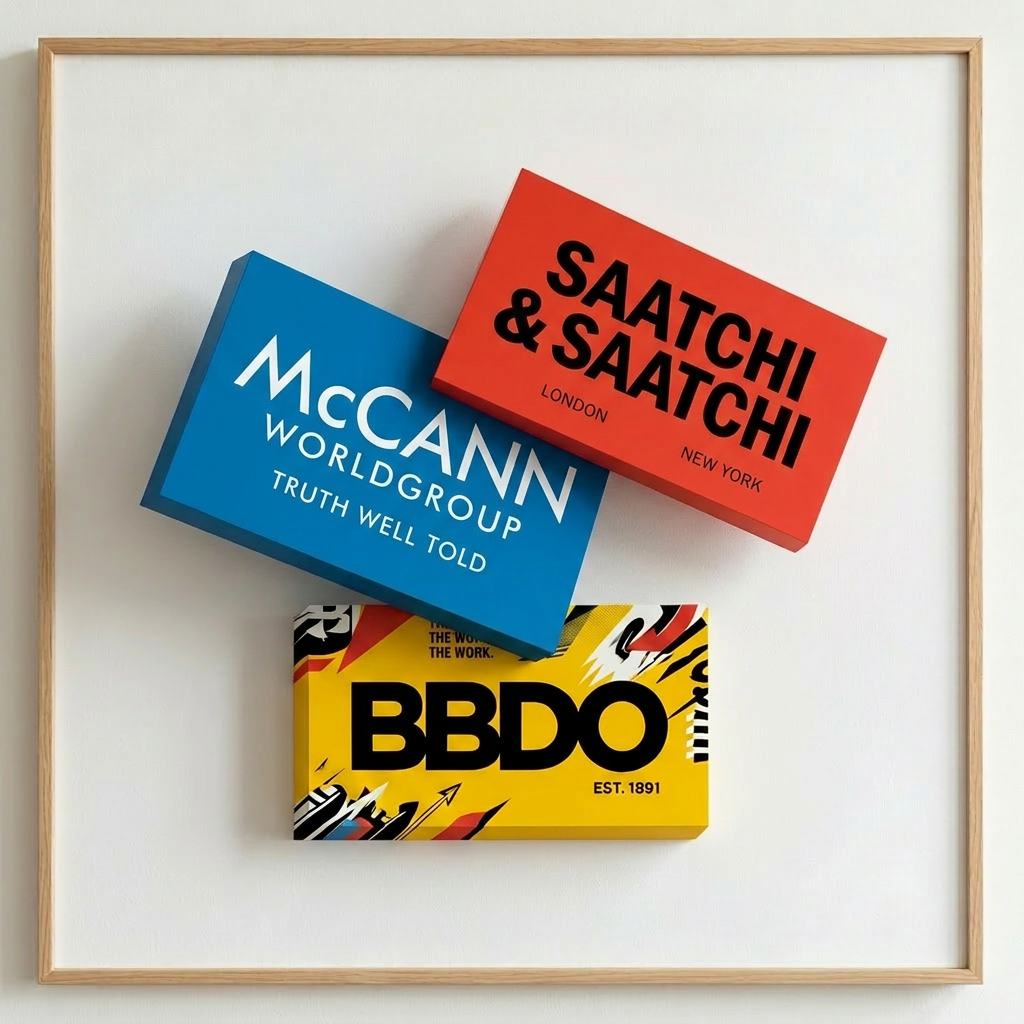
Across global agency networks including McCann Erickson, Saatchi & Saatchi, and BBDO, I worked on brands that did not have the luxury of getting it wrong. Coca-Cola, Procter & Gamble, and MasterCard were not just accounts. They were systems of decision making, scale, and consequence.
What that taught me early on is simple.
Strategy is not separate from execution.
And what looks like communication on the surface is often a much deeper question of alignment.
Seeing What Others Miss
One of the most defining experiences in my career was working on MasterCard at the time the “Priceless” campaign was being developed globally.
The insight behind it was deceptively simple.
People felt a quiet discomfort when spending on credit. The moment of purchase was emotional, but the repayment stretched over time, long after the feeling had faded. There was a disconnect between experience and cost.
The campaign reframed that entirely.
It shifted the conversation from transaction to meaning.
From price to value.
From spending to moments that mattered.
What followed was one of the most enduring global campaigns, precisely because it was built on a human truth that most people feel, but rarely articulate.
That experience reinforced something I continue to believe.
The most powerful strategies are not complex. They are precise.
And when they are, their impact becomes, in every sense, “priceless”.

Operating Across Markets
My work has taken place across multiple regions, from Europe to Central Asia, and across industries where the stakes, the pace, and the constraints were very different.
At Coca-Cola and Procter & Gamble, the challenge was scale and consistency.
How do you maintain a coherent brand while operating across diverse markets, cultures, and consumer behaviors?
Those environments sharpened my ability to see patterns across complexity, and to translate positioning into decisions that could actually be implemented.
Because ultimately, strategy that cannot move through an organization is not strategy. It is theory.
At one point, I saw a gap that was difficult to ignore.
Building What Did Not Exist
I established and led the first international healthcare advertising practice in Türkiye within Grey Worldwide, Healthy People. It was not an incremental move. It required redefining how healthcare communication could be approached, bringing together scientific responsibility with strategic clarity.
The practice reached profitability within its first three months, demonstrating both strong market demand and the effectiveness of a more strategic approach to healthcare communication.
We worked with global companies including Pfizer, GSK, Abbott, Novartis, Bayer, and MSD. What that experience gave me was not just leadership. It gave me a deeper understanding of responsibility in strategy, because in that context communication is not just about persuasion.
It is about impact.
I’ve worked with some of the best companies and their brands.




Questions I Get
What is your process when working on smaller projects?
Even in smaller projects, I don’t approach things tactically first. I look for what actually holds. That usually means stepping back, understanding the context, and identifying what is already there but not fully seen. Once that becomes clear, the execution tends to follow naturally and with much less friction.
Do you approach academia differently from industry work?
The environments are different, but the standard is the same. What holds in theory should also hold in practice, and vice versa. Most people operate from one side, either grounded in industry or in academia. I move between both with that expectation, translating ideas into something that can actually work, not just something that sounds right.
What do you look for when working with an organization?
I pay attention to whether there is a willingness to go beyond surface-level solutions. The most meaningful work happens when people are open to examining what is actually driving decisions, not just what appears to be the issue.
What kind of work interests you most?
I am drawn to work where there is real pain, but the problem is not yet fully defined. Where complexity and uncertainty are present, and direction has not yet taken form. These are the moments where something new needs to emerge and something else needs to be left behind. I tend to see the end state early, which makes it possible to move through that ambiguity with intention.

